ELECTROLYSIS
Electro-etching on copper
Use luminous blue electrolyte water in place of hazardous chemistry while maintaining the depth, detail, and expressive range of traditional etching.
Florence School of Fine Arts
Travel Study Workshop
The etched line originates from Blue Water, Not Acid!
ELECTROLYSIS AND COPPER SULFATE ETCHING IN FLORENCE, ITALY!
MAY 9–22, 2027
A new, safe & green approach to intaglio
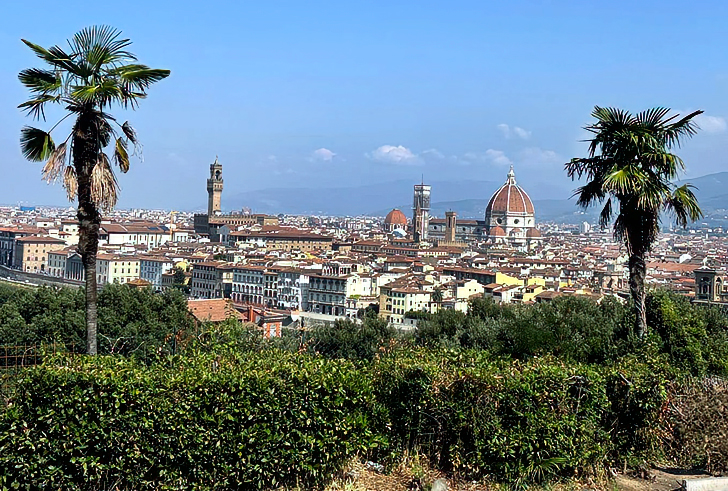
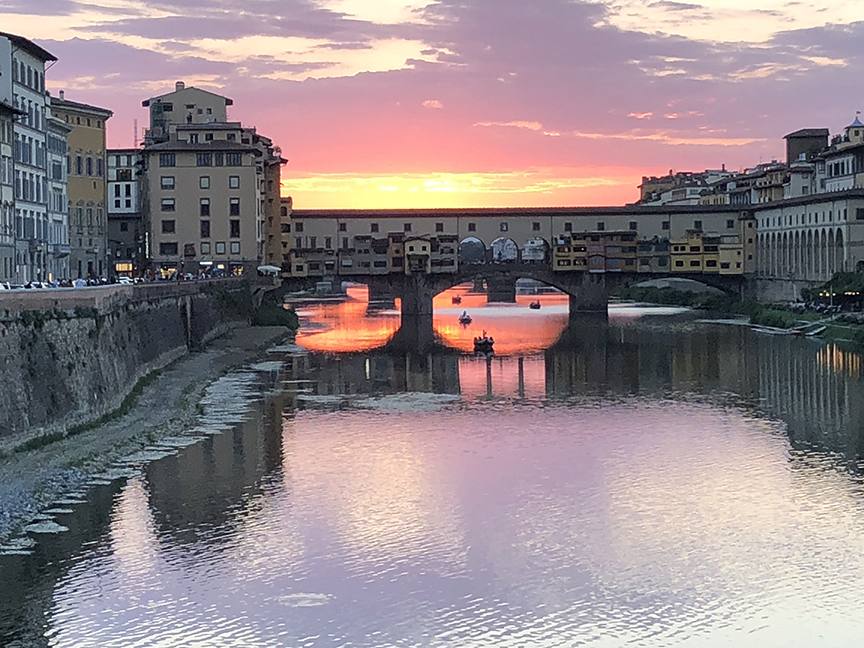
Florence School of Fine Arts offers an incomparable travel workshop in the cradle of the Renaissance, the beautiful city of Florence, Italy, where in the early Renaissance the artist Antonio del Pollaiolo explored a new engraving technique and created the first print to be clearly signed by the artist.
Today Florence remains a living center of art, culture, architecture, and craftsmanship, where historic studios, museums, churches, markets, and streets become part of real life. Beyond the city, the Tuscan landscape unfolds through vineyards, olive groves, working farms, and medieval hill towns. It is a place that bases its knowledge on ancient traditions, making Florence the capital of art and culture in the world.
The strong tradition, combined with new research in the graphic arts, continues at Florence School of Fine Arts with innovative non-toxic procedures. Sustainability is the keyword for this workshop, taught in the unique facilities of the Florence School of Fine Arts—an international program specialized in printmaking methods for over twenty years—introducing a new, safe and green approach to intaglio printmaking.
How it works
Participants will create their etchings on copper and zinc plates using the Blue Water methods: electrolysis and copper sulfate baths. Participants are encouraged to explore the beauty of the city in combination with their own imagery. An introduction to basic intaglio will be given.
ELECTROLYSIS
Use luminous blue electrolyte water in place of hazardous chemistry while maintaining the depth, detail, and expressive range of traditional etching.
COPPER SULFATE
Learn the second Blue Water method: a copper sulfate bath used to etch zinc plates safely and reliably.
WATER-BASED INKS
Print plates with water-based inks to create a workflow free of toxic and corrosive fumes.
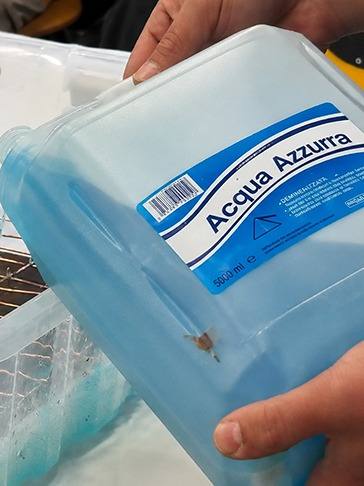
ACQUA AZZURRA offers a complete printmaking practice that protects both the artist and the environment, and equips you with methods you can confidently recreate wherever you work.




The workshop also includes a welcome reception at the school, a guided city tour of Florence, a museum visit with the instructor, a food, olive oil and wine tasting field trip in the Chianti countryside, and a farewell dinner.
Two weeks in Florence, day by day
Participants are strongly encouraged to arrive in Florence between 9:00 a.m. and 6:00 p.m. to ensure that someone is available to receive them and assist with check-in when using Florence School of Fine Arts housing.
Welcome reception at Florence School of Fine Arts followed by a guided city tour of Florence, paper, sketchbook and tools shopping for the workshop, then an introduction back at the studio.
All day in the studio, from 9:30 a.m. to 5:30 p.m.
An all-day visit with the instructor, including the Baptistery, Giotto’s Bell Tower, Brunelleschi’s Dome, the Opera del Duomo Museum and the crypt of Santa Reparata. Be prepared to climb the Dome and see a stunning landscape!
All day in the studio, from 9:30 a.m. to 5:30 p.m.
A free day for shopping and discovering the city.
All day in the studio, from 9:30 a.m. to 5:30 p.m.
An all-day field trip in Chianti for a food, olive oil and wine tasting excursion. Wear comfortable shoes for walking and bring your sketchbook!
All day in the studio, from 9:30 a.m. to 5:30 p.m.
The last day of the workshop: finishing projects, followed by a farewell dinner all together.
Check out of housing and departure.
The program itinerary is subject to minor changes.


Costs and practical details
Tuition
$2,650Instruction, studio access, materials and included eventsHousing · Double
$1,950Shared room with another member of the groupHousing · Single
$2,350Single bedroom in a shared apartment—limited availabilityParticipants may arrange accommodation independently; Florence offers many possibilities in apartments, hotels, and specialized residential facilities. Or, participants may stay in Florence city-center apartments managed by the Florence School of Fine Arts.
School lodging is provided in shared apartments with other workshop participants. Apartments include fully equipped kitchens where breakfast and other meals can be prepared. Please request your housing type at the time of application.
Single rooms are limited and cannot be guaranteed. They are assigned in the order deposits are received. Housing costs apply only to participants taking housing through the Florence School of Fine Arts.
Reservations, payments & policies
A $700 deposit is required by February 1, 2027, to reserve a place in the program. Your place is confirmed only upon receipt of the deposit. Because enrollment is limited, the program may fill before the deposit deadline. Deposits may be paid by bank wire transfer. Once the program has been confirmed, the remaining balance will be due by April 1, 2027.
Deposits and final payments are non-refundable unless the program is cancelled by the Florence School of Fine Arts. In the event of cancellation by FSFA, participants will receive a full refund of program fees paid. Please do not purchase airline tickets or make other non-refundable travel arrangements until the program director has confirmed that the workshop will proceed.
Practical matters, plainly stated
Participants are responsible for their own travel arrangements to and from Florence. We strongly recommend comprehensive travel insurance with sufficient coverage for emergency medical expenses and evacuation, trip cancellation or interruption, lost or damaged luggage, and other unexpected circumstances. Please check with your insurance provider for specific coverage information.
The Florence School of Fine Arts cannot be held responsible for accidents, illness, quarantine requirements, or other unforeseen circumstances that may occur during the trip, including costs associated with additional accommodations, flight changes, transportation, or medical expenses.
This program involves a moderate amount of physical activity. Florence is a walking city: participants should expect uneven streets and sidewalks, busy crossings, stairs, and extended periods on foot. Participants are also responsible for carrying their own luggage to and within their accommodations.
An online pre-departure meeting will be held in February 2027; exact date and time will be announced.
Applications close January 15, 2027
Download the official one-page application form. You can open it in your browser, save it, print it, and complete it. Or click the link and enroll online.
Official workshop application · 1 page
An online pre-departure meeting will be held in February 2027. Exact date and time to be announced.
One integrated studio, seven disciplines
The Print Media Department at the Florence School of Fine Arts is among the most comprehensive university-level printmaking facilities in Italy. While many programs offer a single print discipline, our department brings together letterpress, lithography, intaglio, silkscreen, risograph, book arts, and alternative photographic processes within one integrated studio, allowing participants to move freely between traditional and contemporary techniques.
At the heart of the department is an exceptional collection of historic presses and equipment that has been painstakingly restored to full working condition by founders Melania Lanzini and Charles Loverme. Rather than serving as museum pieces, these nineteenth- and twentieth-century machines remain active teaching tools used daily throughout the workshop. Participants learn not only the history of printmaking, but also how to work confidently on the very presses that shaped its development.
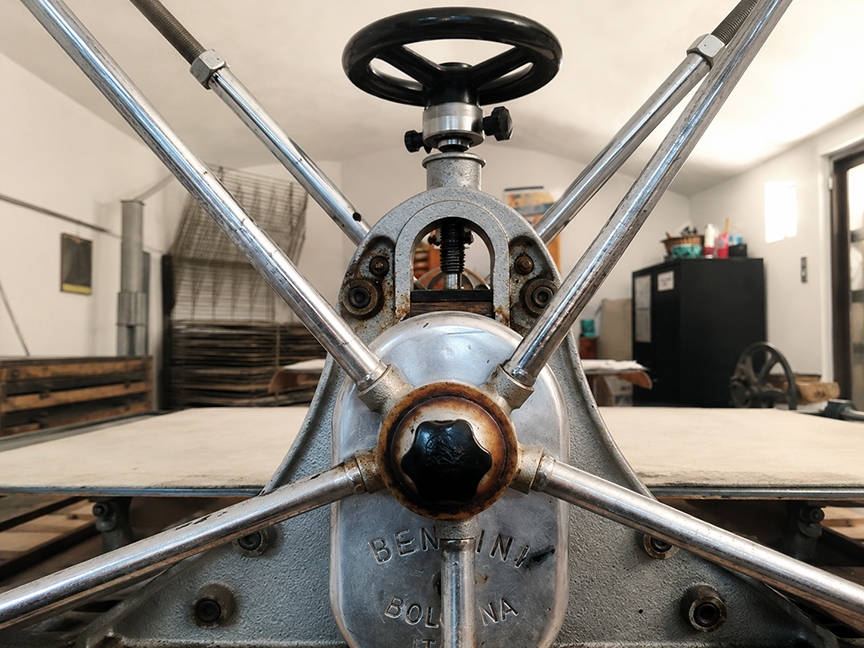
Facilities include nineteenth-century Albion and Stanhope iron hand presses for letterpress, beautifully restored wooden star-wheel lithography presses, Bendini etching presses, professional silkscreen studios with large- and small-format UV exposure units, a dedicated risograph studio, and extensive resources for artist books, photomechanical processes, and experimental printmaking.

The department encourages crossover between disciplines. A project may begin as a copper etching, evolve into lithography, incorporate silkscreen or letterpress, and conclude as a hand-bound artist’s book or risograph edition. This interdisciplinary approach reflects the way contemporary printmakers work today while remaining grounded in centuries of traditional craftsmanship.
What ultimately distinguishes the Florence School of Fine Arts is not simply the equipment itself, but the opportunity to learn directly from artists who restored these historic presses, use them professionally, and have dedicated their careers to preserving—and advancing—the traditions of printmaking.
The Florence School of Fine Arts is committed to making printmaking safer for both artists and the environment. Over the past two decades, we have systematically replaced many traditional hazardous materials with contemporary alternatives that reduce toxic exposure while maintaining professional print quality. Participants learn sustainable approaches to intaglio, lithography, silkscreen, and photographic processes that can be carried into their own studios long after the workshop ends.
Our studios emphasize safer chemistry, responsible material handling, conservation of resources, and the reuse and recycling of materials whenever possible. Sustainability is treated not as a separate topic, but as an integral part of professional studio practice.
By combining historic equipment with contemporary environmental practices, the department demonstrates that traditional printmaking can continue to evolve without compromising either artistic excellence or environmental responsibility.
An artist-run school for over two decades
The Florence School of Fine Arts was founded by two working artists who believe that the best art education grows from active studio practice, where teaching and artistic research continually inform one another. For more than two decades, Melania Lanzini and Charles Loverme have built an artist-run school where students work directly with practicing artists whose own creative work continues to shape the classroom.
Their combined experience spans international exhibitions, university teaching, curriculum development, publishing, and collaborations with leading figures in contemporary art. In celebration of the 500th anniversary of Giorgio Vasari’s birth, they invited Bill Viola to create an exhibition at the Florence School of Fine Arts. He accepted immediately and later explained that what drew him to the school was exactly what continues to define it today: its small scale, its seriousness, and its artist-run vision.
When you study at the Florence School of Fine Arts, you are not simply learning techniques—you are joining a community built by artists and educators who continue to shape the future of contemporary art education while remaining deeply rooted in the traditions of the studio.
Artist, Co-founder and Art Director
Melania Lanzini is a Florentine multidisciplinary artist whose work spans printmaking, performance, video, and installation. Her research explores the relationship between the body, image, and material through works that combine traditional graphic processes with contemporary artistic practice. Born and educated in Florence, she trained at the Accademia di Belle Arti di Firenze before pursuing postgraduate research at the University of the Arts Helsinki. She is also a certified painting restorer, a background that informs her deep understanding of materials, surfaces, and print processes.
Her work has been exhibited internationally in museums, galleries, and festivals, from Helsinki and Bolzano to New York and Belgrade, and has been featured in Flash Art, Tema Celeste, Exibart, and other leading contemporary art publications. For Vasari’s 500th anniversary, she curated 500 Oggi: Le Vite dell’Arte in Contemporanea, bringing together leading international artists, including video art pioneer Bill Viola. She also participated as an exhibiting artist, and the accompanying catalogue, featuring her essays, was published by Edizioni Polistampa, Florence.
Alongside her artistic practice, she is Professor of Graphic Arts at the Accademia di Belle Arti di Venezia and has taught American students for more than three decades, including at the Accademia di Belle Arti di Firenze, Studio Art College International (SACI), and as Visiting Professor of Installation and Performance at Western Michigan University. As co-founder and Art Director of the Florence School of Fine Arts, she teaches stone lithography, letterpress, risograph, etching, silkscreen, and artist books—the only school in Florence offering this complete range of traditional and contemporary printmaking. Since 2018 she has co-directed Arno River Press, publishing limited-edition artist books.
Educator, and Dean of Research and Creative Practices
Charles Loverme is a photographer, and book artist whose work spans photography, printmaking, digital media, and interdisciplinary studio practice. His relationship with Florence began as a young independent study-abroad student, when he came to the city to build a portfolio of work—an experience that would shape the rest of his life and career.
He earned his undergraduate degree from the School of the Museum of Fine Arts, Boston, and his MFA from the University of Colorado Boulder. Throughout his academic career he has led the development of innovative art curricula, redesigning degree programs and expanding interdisciplinary studio practice in response to the changing nature of contemporary art. His work has helped shape programs at Western Michigan University, Rivier University, Chester College, Studio Art College International (SACI), and the Florence School of Fine Arts.
As co-founder and Dean of Research and Creative Practices at the Florence School of Fine Arts, he continues to guide the school’s academic direction, bringing together historical processes, contemporary practice, and emerging ideas in art and technology. His teaching is grounded in the belief that every medium—from photography and printmaking to AI—is valuable not for its novelty, but for its ability to deepen artistic inquiry. He is co-founder of Arno River Press, his work has been exhibited and screened internationally—including PBS, SIGGRAPH, and Mix New York—and he is the author of A Kiss from Florence, a memoir of a young Brooklyn artist’s life-changing journey to the city.